
信息来源:数学学院 研数视界 发布日期:2026年4月28日
报告人:韩雅琪
报告题目(英文):
Properties of the Adjacency Operator Spectrum of Free Product Graphs
报告题目(中文):
自由积图邻接算子谱的性质
Abstract
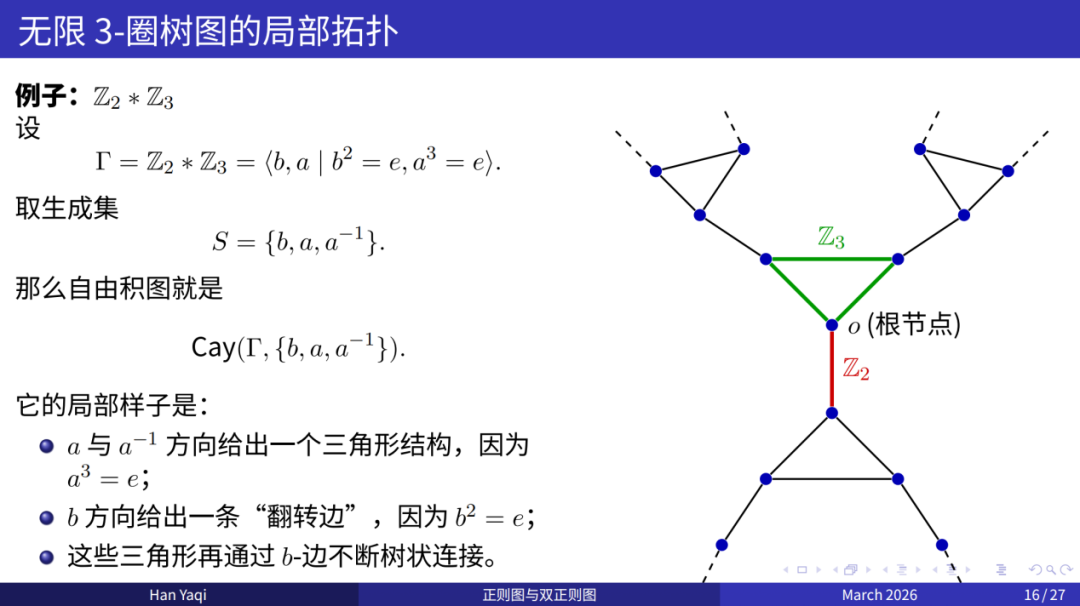
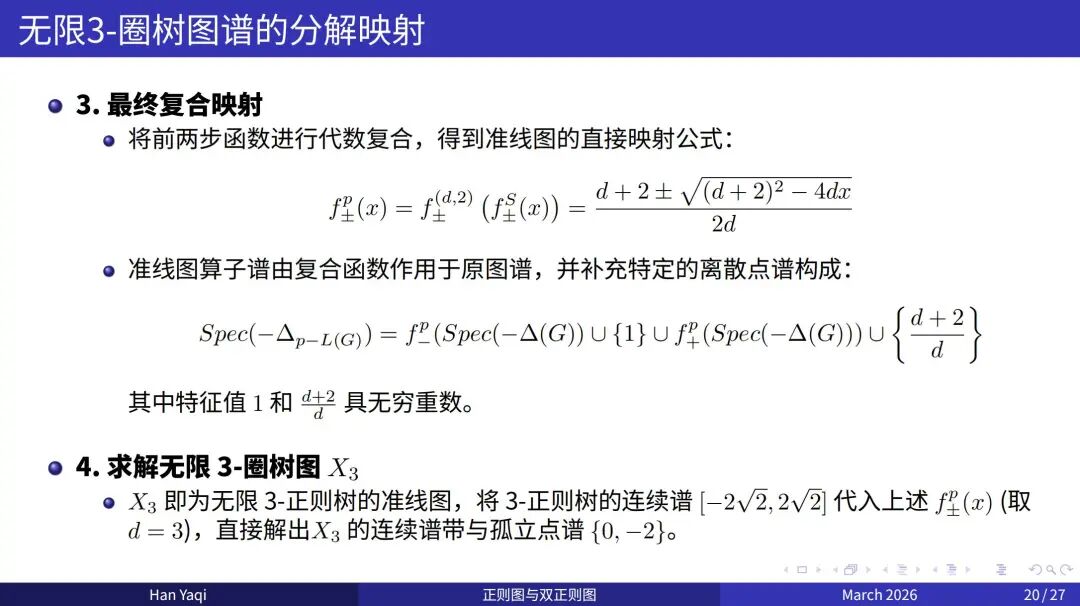
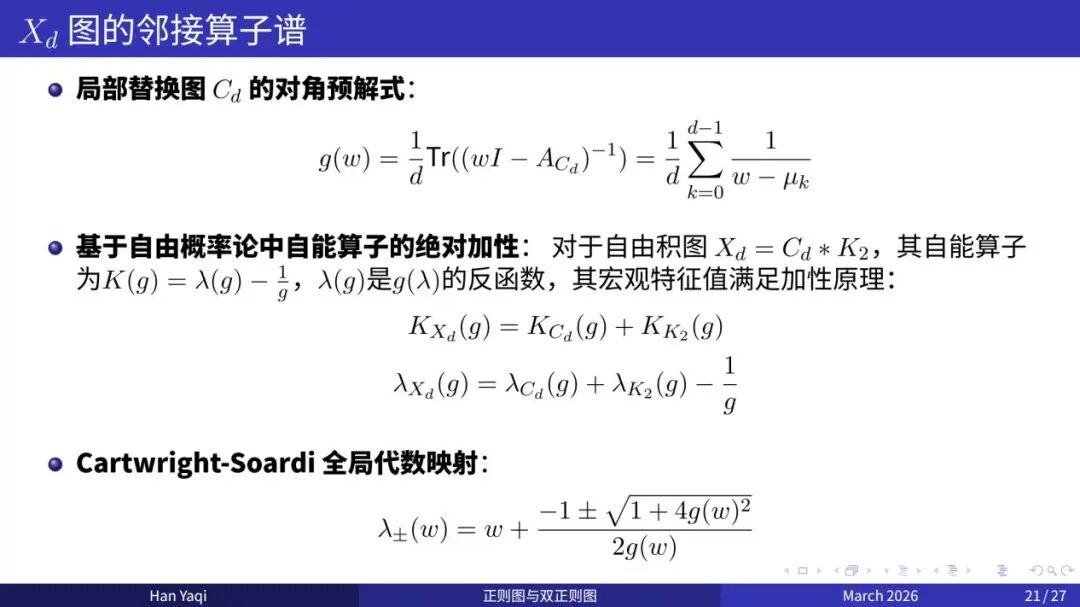
This report systematically analyzes and calculates the adjacency matrix operator spectra of regular and semi-regular graphs with specific structures. It introduces the concept of para-line graphs and derives the spectral expression formulas for the para-line graphs of infinite -semi-regular graphs and the subdivision graphs of d-regular graphs, subsequently providing the exact solution for the adjacency operator spectrum of the infinite 3-cycle tree graph. For the infinite graph , where vertices are replaced by d-polygons, the study leverages Voiculescu's free probability theory and the Cartwright-Soardi global mapping to establish an algebraic connection between the resolvent of local fundamental blocks and the eigenvalues of the macroscopic system. This approach precisely locates the boundaries of the continuous spectral bands and the discrete point spectrum formed by local standing waves.
PPT展示

报告人:张华悦
报告题目(英文):
Prediction of Cardiovascular Disease Risk and Risk Factor Assessment in Diabetic Patients Based on Deep Learning and Interpretability Methods
报告题目(中文):
基于深度学习和可解释性方法的糖尿病患者心血管疾病风险预测及风险因素评估
Abstract
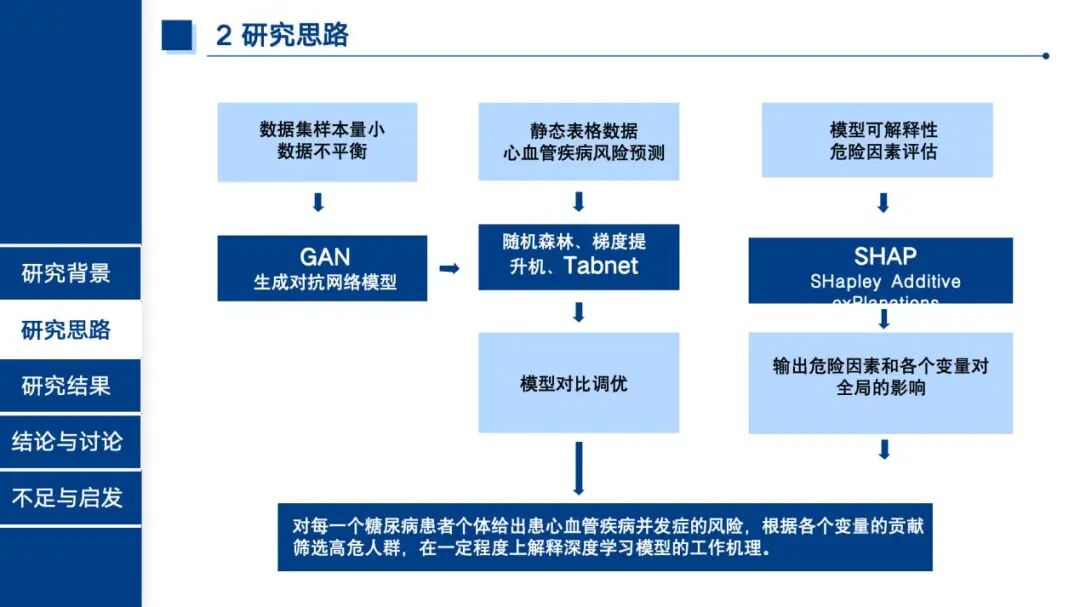
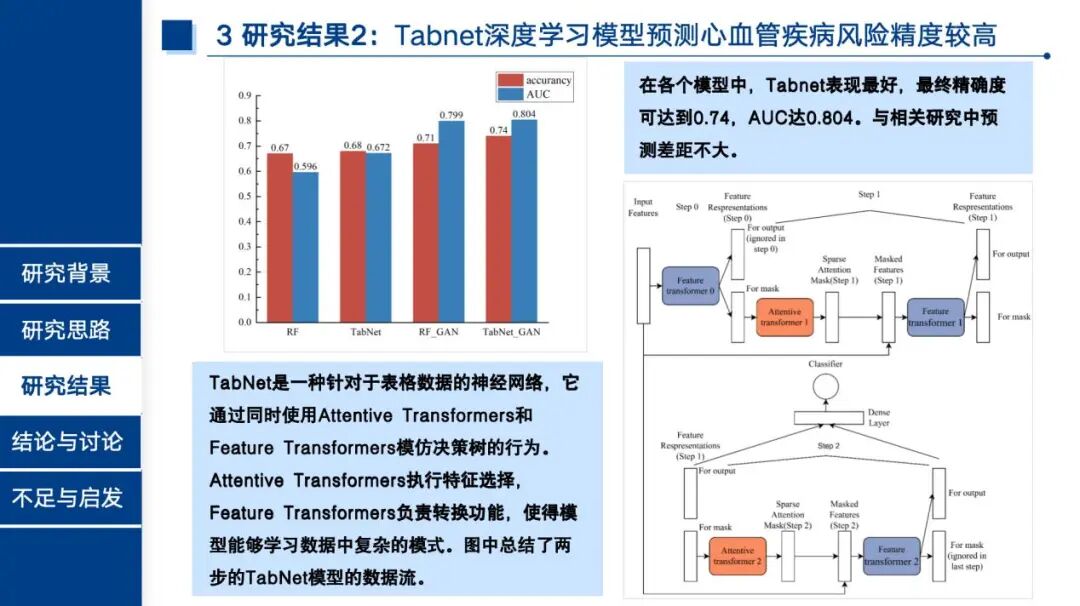
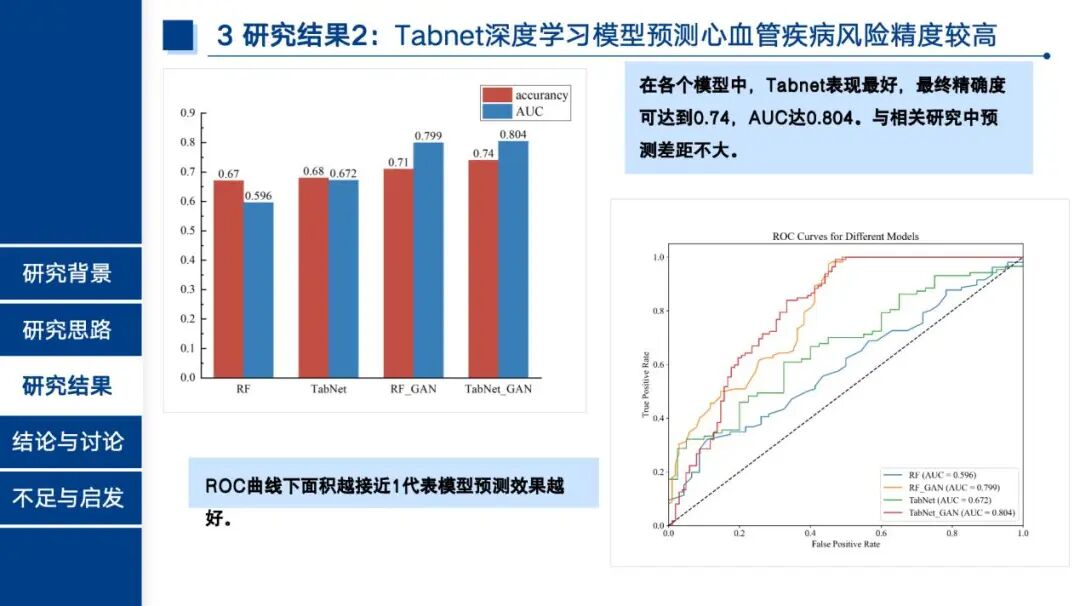
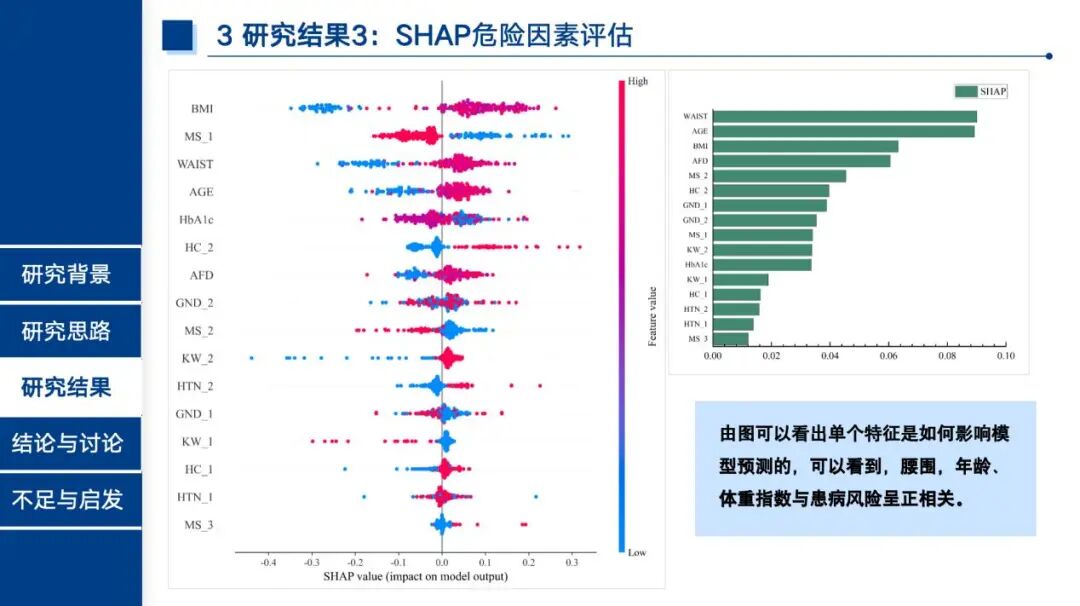
Background Diabetes and cardiovascular diseases (CVD) are two major causes of death in the United States. Therefore, accurately predicting the likelihood of cardiovascular disease in diabetic patients and identifying high-risk individuals is of great importance. Methods and Results Our sample includes 1,080 adult diabetic patients from the National Health and Nutrition Examination Survey dataset in the United States, with ten features such as gender, age, body mass index (BMI), history of hypertension, and history of high cholesterol. This paper develops a new deep learning framework that addresses the common issue of sample imbalance in the medical field. An Attentive Interpretable Tabular Learning model (TabNet) was constructed to predict the risk of cardiovascular disease in individual diabetic patients, achieving an accuracy of 0.74 and an AU-ROC value of 0.804. SHapley Additive exPlanations methods (SHAP) were used to assess the risk factors for cardiovascular disease in diabetic patients, identifying waist circumference, age, and body mass index as the top three influencing factors. Conclusion Deep learning methods have great applicability and high accuracy in predicting cardiovascular disease risk in diabetic patients. Elderly and obese diabetic patients, especially those with abdominal obesity, are at high risk for cardiovascular disease. Diabetic patients with a history of high cholesterol also face an increased risk of cardiovascular disease.
PPT展示
Copyright ©2016 中国人民大学科学技术发展部 版权所有
地址:北京市海淀区中关村大街59号中国人民大学明德主楼1121B 邮编:100872
电话:010-62513381 传真:010-62514955 电子邮箱: ligongchu@ruc.edu.cn
京公网安备110402430004号