
信息来源:数学学院研新社 研数视界 发布日期:2026年4月28日
报告人:姚睿哲
报告题目(英文):
SLFE-NC: An Abnormal Transaction Detection Method for Bitcoin based on Data Augmentation
报告题目(中文):
SLFE-NC:一种基于数据增强的比特币异常交易检测方法
Abstract
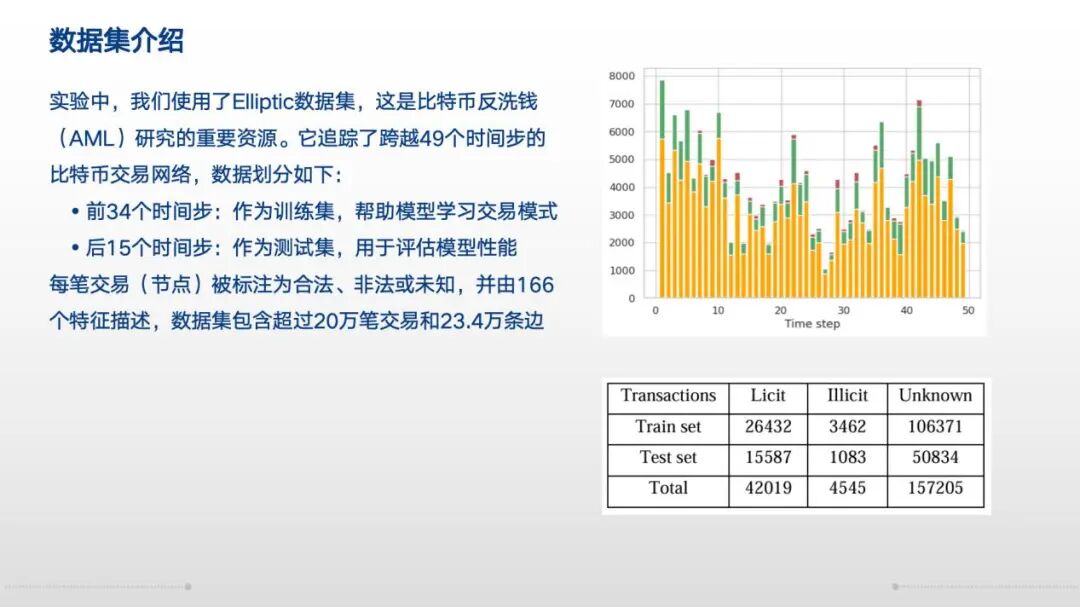
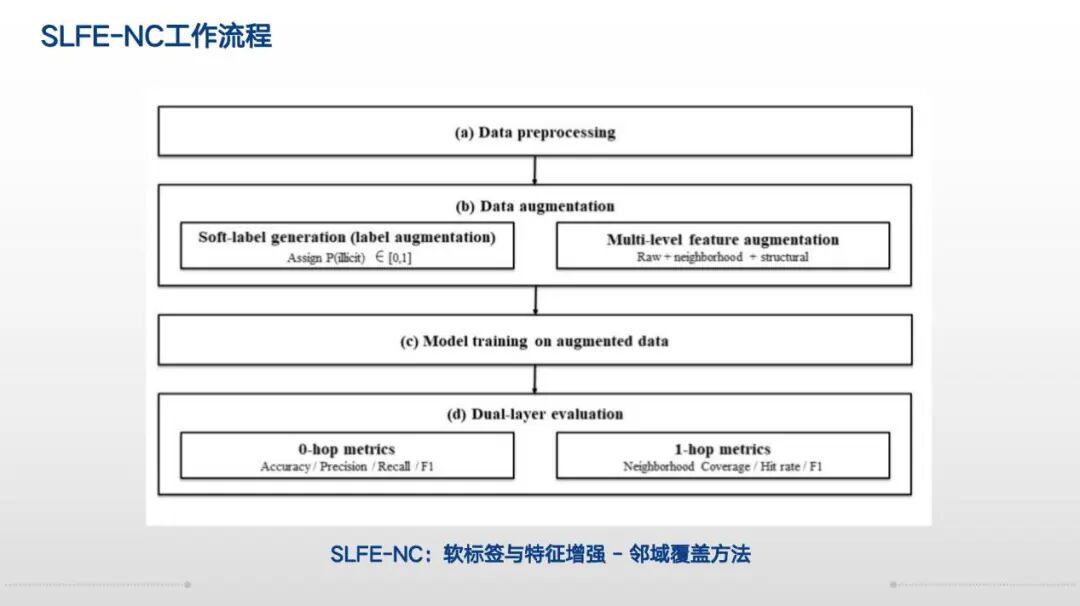
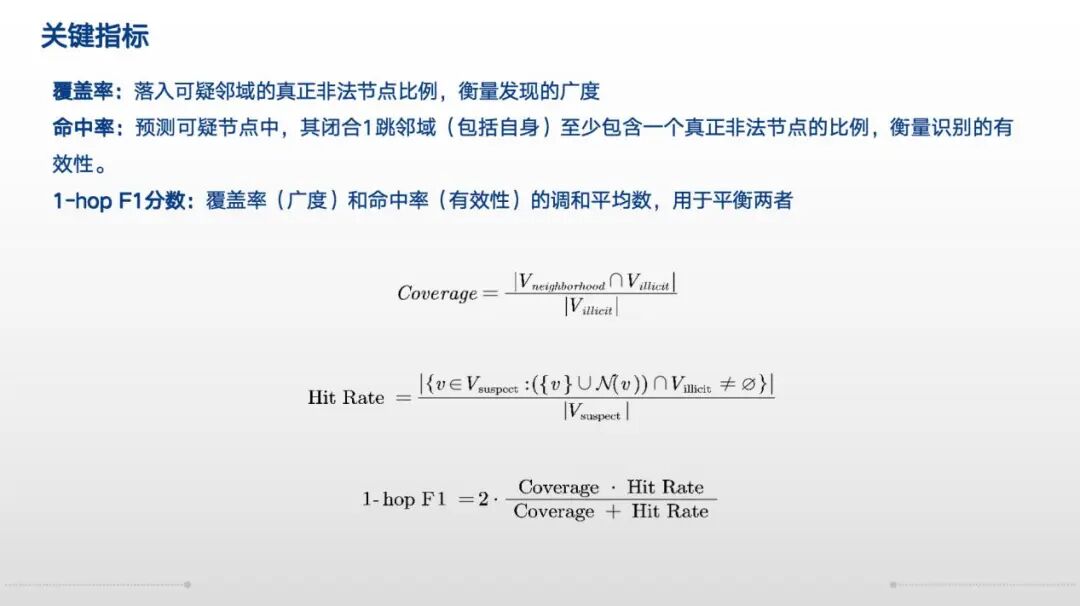
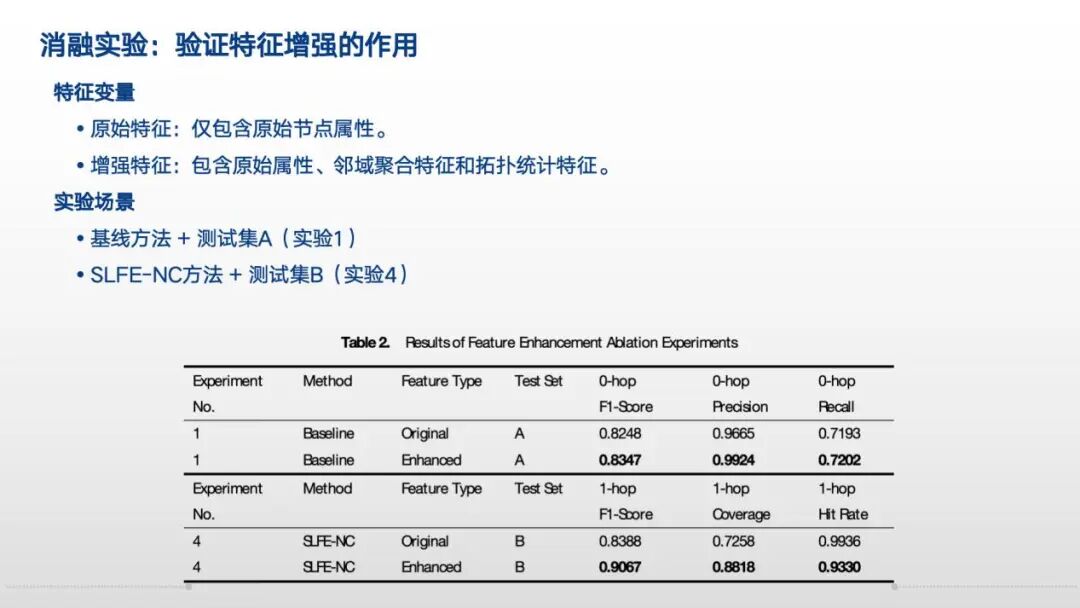
Bitcoin’s decentralization and anonymity facilitate illicit financial activities such as money laundering and terrorist financing, yet existing abnormal transaction detection models mostly rely on a limited number of labelled samples while ignoring a majority of unlabelled samples. This may lead to the potential loss of graph-structural information and poor generalization. To address this, we propose SLFE-NC, a novel abnormal transaction detection method for Bitcoin based on data augmentation. First, a soft-label generation strategy assigns each unlabelled node an illicit probability (0–1) using labelled neighbors’ information, expanding the effective training set by over 100%. Second, a 499-dimensional multilevel feature vector is constructed, integrating raw transaction attributes, neighborhood-aggregation signals, and graph-structural statistics to enhance feature representation. Finally, an evaluation system (neighbourhood coverage, hit rate, and F1-score) is designed to align with real-world investigation workflows. Experiments on the Elliptic dataset (2×2 factorial design) show that SLFE-NC achieves a 1-hop F1-score of 90.67% on the complex test set, outperforming the baseline significantly. Ablation studies confirm that the feature enhancement module is critical for improving model robustness in incomplete-label scenarios. SLFE-NC boosts data utilization and scenario adaptability, accurately identifies hidden illicit transactions and their associated networks, and supports Bitcoin anti-money laundering efforts.
PPT展示
报告人:何臻辉
报告题目(英文):
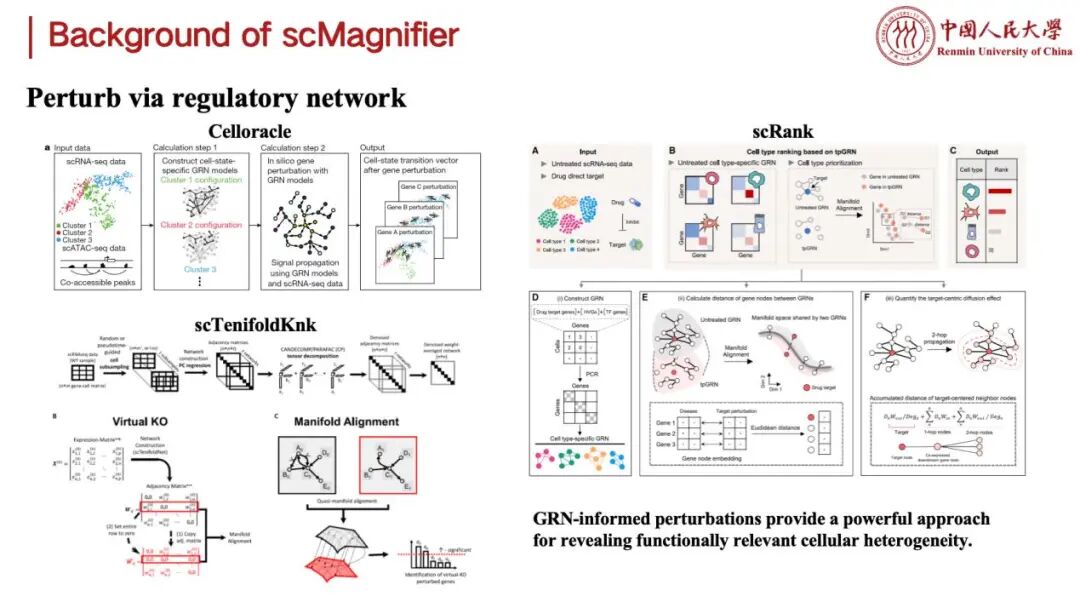
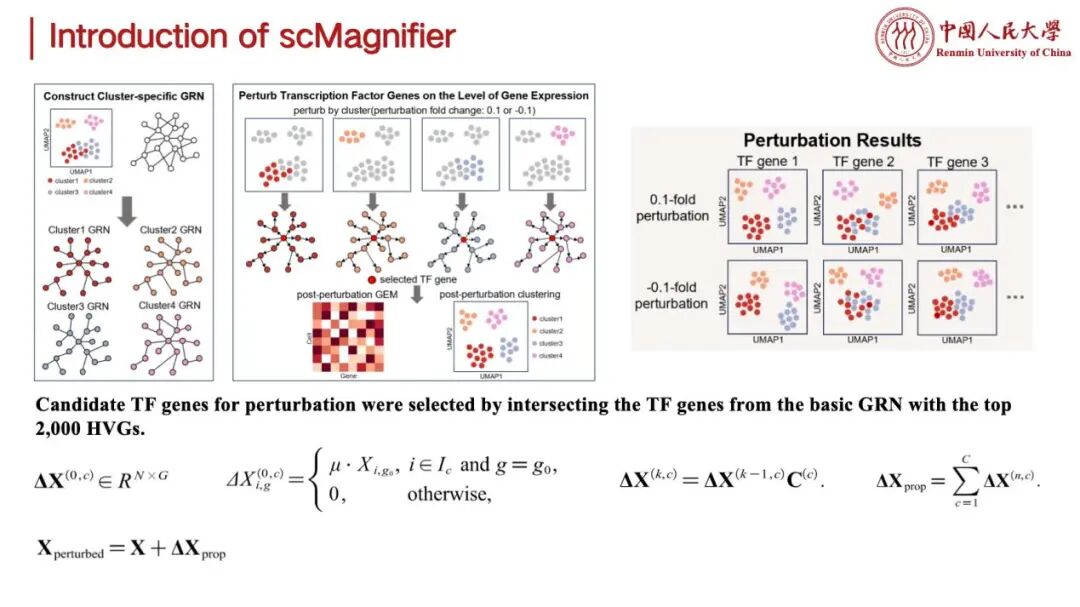
scMagnifier: resolving fine-grained cell subtypes via GRN-informed perturbations and consensus clustering
报告题目(中文):
scMagnifier:基于基因调控网络扰动与一致性聚类的精细细胞亚型解析
Abstract
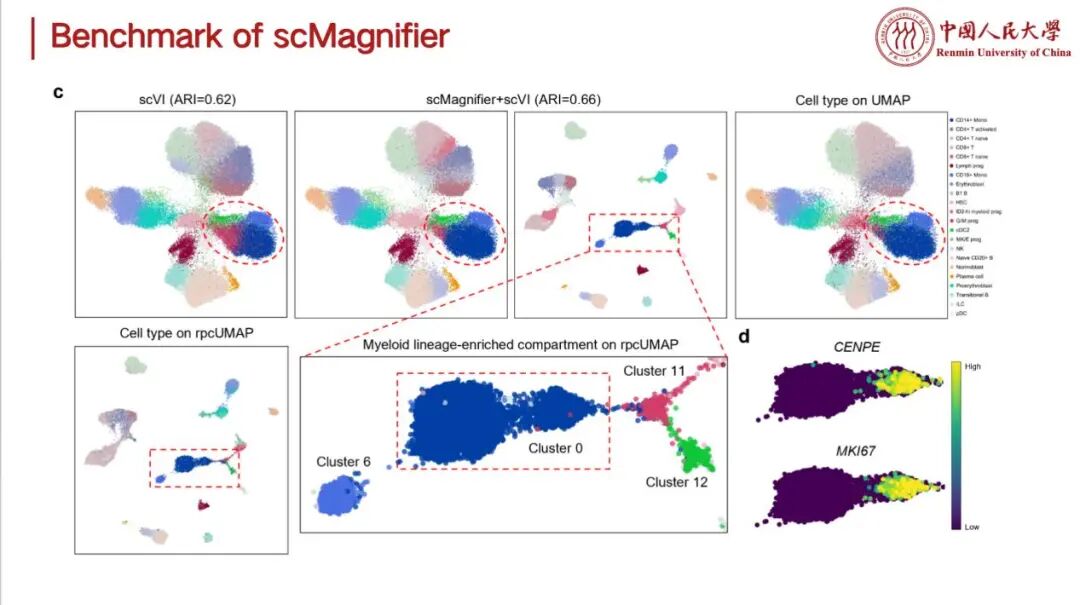
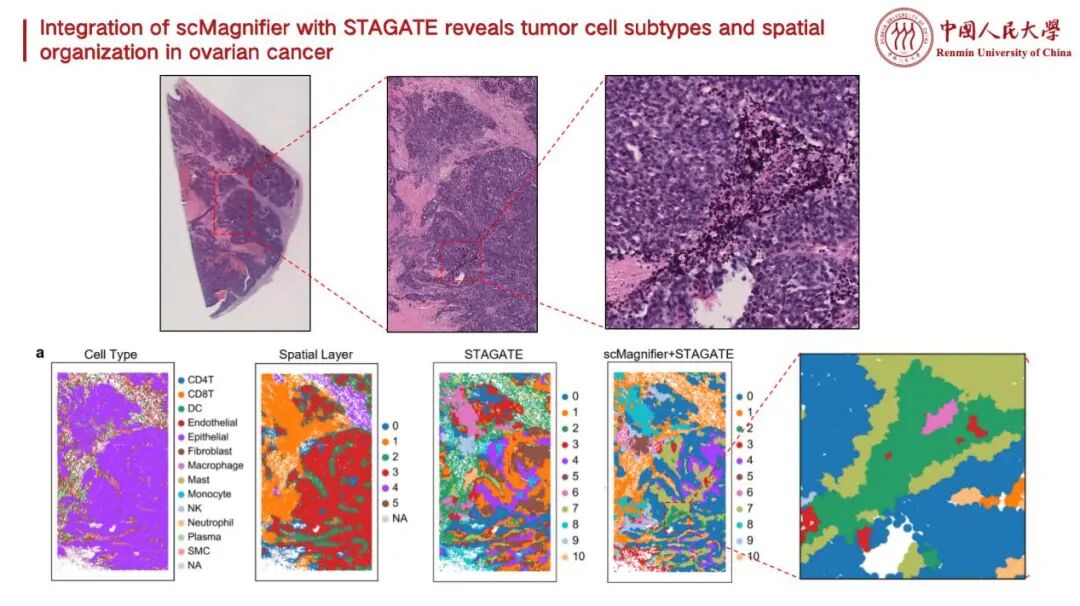
Resolving fine-grained cell subtypes in single-cell RNA sequencing (scRNA-seq) data remains challenging, as their subtle transcriptional differences are often obscured by technical noise and data sparsity. Here, we present scMagnifier, a consensus clustering framework that leverages gene regulatory network (GRN)-informed in silico perturbations to amplify subtle transcriptional differences and uncover latent cell subpopulations. scMagnifier perturbs candidate transcription factors (TFs), propagates perturbation effects through cluster-specific GRNs to simulate post-perturbation expression profiles, and integrates clustering results across multiple perturbations into stable subtype assignments. Additionally, scMagnifier introduces regulatory perturbation consensus UMAP (rpcUMAP), a perturbation-aware visualization that provides clearer separation between cell subtypes and guides the selection of the optimal number of clusters. In both single-batch and multi-batch benchmarks, scMagnifier consistently improves the resolution and accuracy of fine-grained cell type identification. Notably, when integrated with spatial clustering methods such as STAGATE, scMagnifier is compatible with spatial transcriptomics workflows and effectively reveals tumor cell subtypes and their spatial organization in ovarian cancer.
PPT展示
报告人:郭哲序
报告题目(英文):
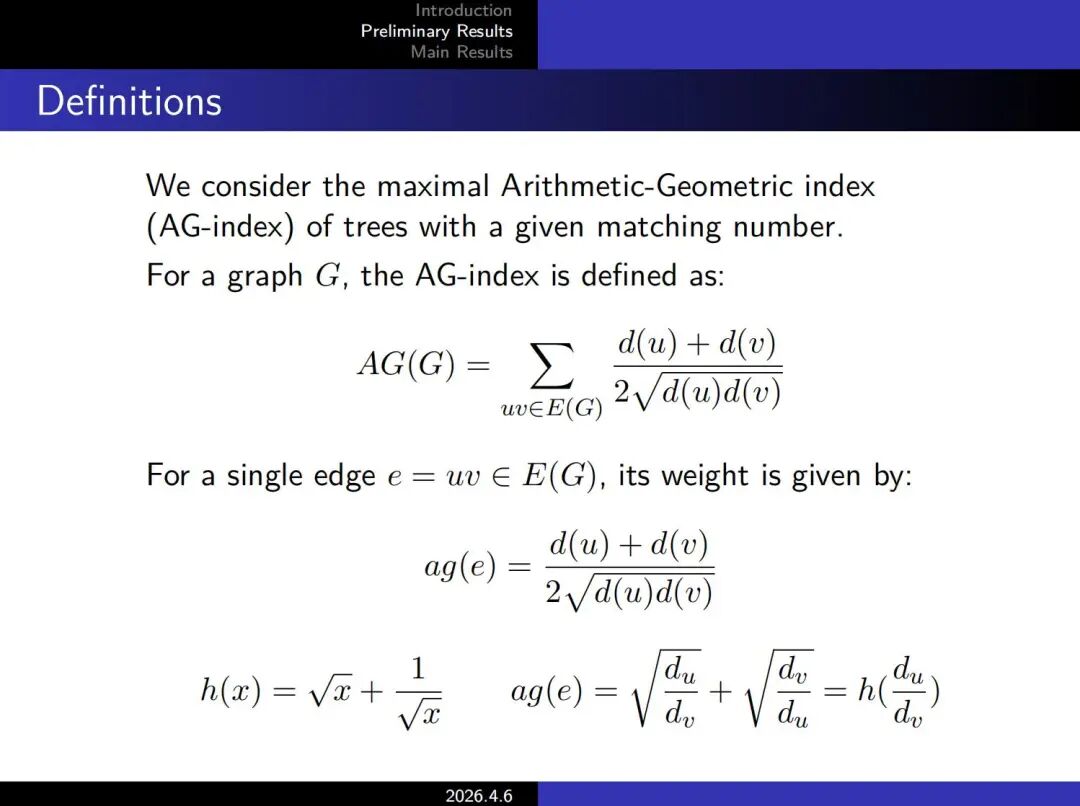
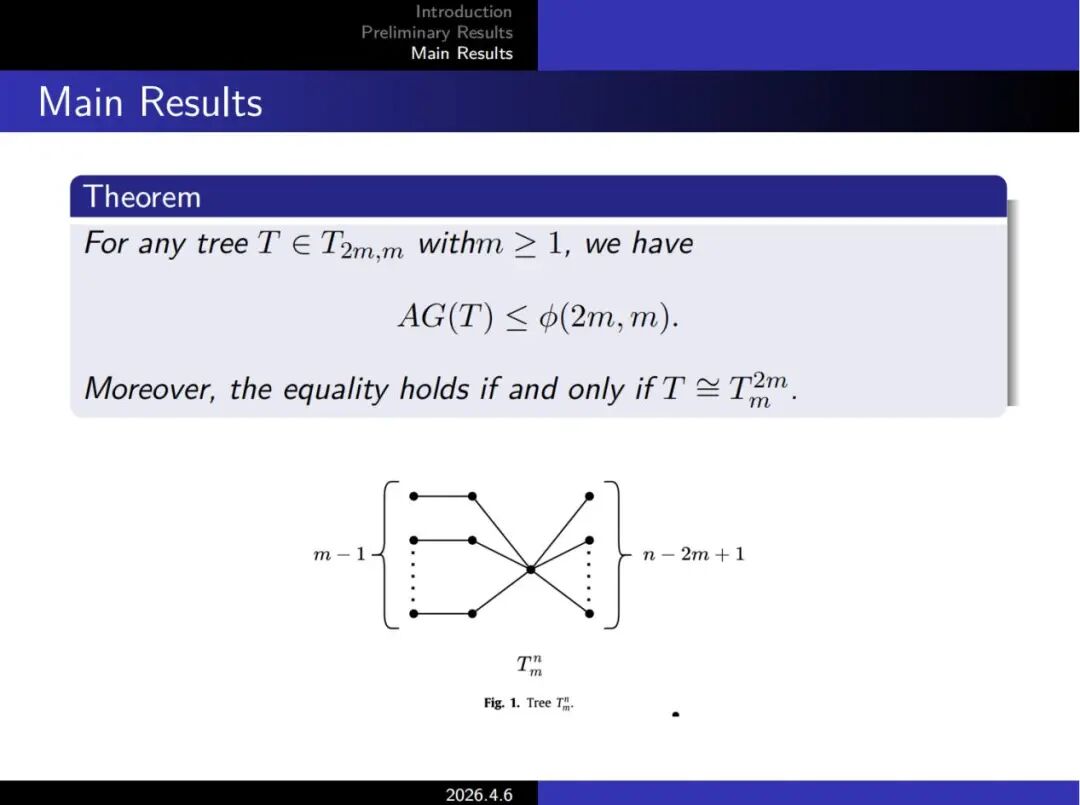
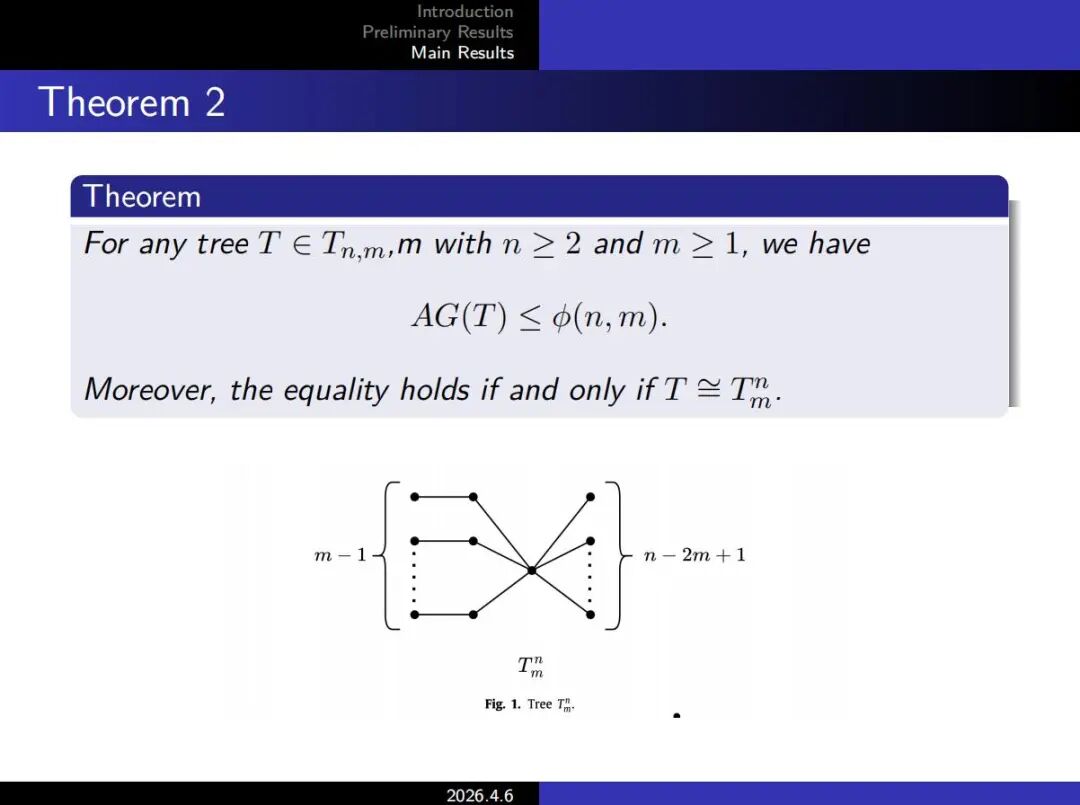
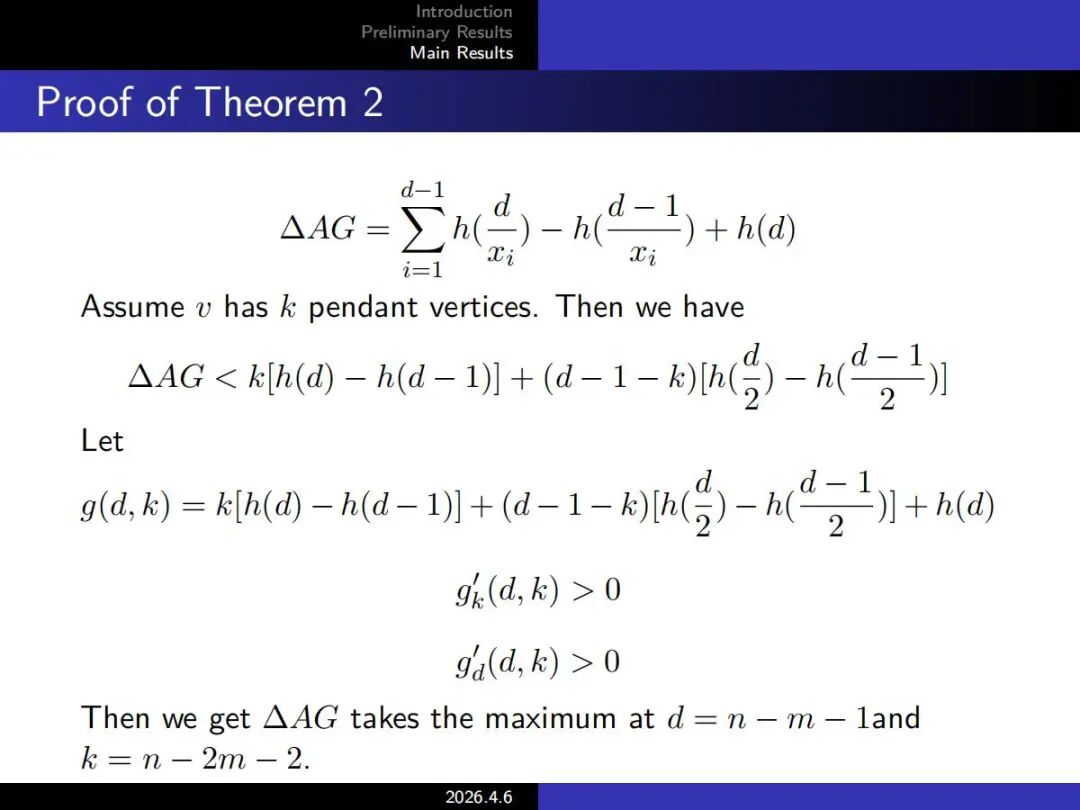
On the maximal AG-index of tree with given matching number
报告题目(中文):
给定匹配数AG指标在树图的上界估计
Abstract
Topological indices, as numerical descriptors of molecular structures, play a pivotal role in mathematical chemistry and graph theory for quantifying structural properties and predicting physico-chemical behaviors of compounds. Among these indices, the Arithmetic-Geometric index (AG index) has garnered significant attention. The matching number (or edge independence number), is another fundamental graph parameter representing the size of the largest set of pairwise non-adjacent edges. For trees, the interplay between topological indices and matching number has been extensively explored for indices such as the Randic index, Zagreb indices, and Sombor index, yet remains relatively underexamined for the AG index. We focuse on estimating the maximum value of the AG index for trees with a given order n and matching number m. We first characterize the extremal trees maximizing the arithmetic-geometric (AG) index among all trees with a perfect matching by means of construction, and then inductively extend the result to the general case of trees with a given matching number, thereby completing the whole proof.
PPT展示
Copyright ©2016 中国人民大学科学技术发展部 版权所有
地址:北京市海淀区中关村大街59号中国人民大学明德主楼1121B 邮编:100872
电话:010-62513381 传真:010-62514955 电子邮箱: ligongchu@ruc.edu.cn
京公网安备110402430004号