
信息来源:中国人民大学健康大数据研究院 发布时间:2025年12月1日
睡眠困难是否会增加痴呆风险?这一问题在既往研究中长期存在分歧:部分研究提示风险升高,而另一些却显示所谓“保护作用”。造成这一矛盾的关键原因可能在于生存偏倚——睡眠困难者往往更早死亡,从而掩盖了真实的痴呆风险。针对这一问题,我院王晓军教授团队基于英国生物样本库45万余名参与者的长期随访数据,引入并应用半竞争风险模型进行重新评估。研究结果显示,在考虑生存偏倚后,经常性睡眠困难会显著增加血管性痴呆风险,并轻度增加全因痴呆风险,这一效应在55岁以下人群及APOE ε4非携带者(低遗传风险人群)中尤为突出;而传统Cox模型却呈现出相反的“保护效应”,提示既往证据可能因方法局限而产生误导。本研究不仅通过统计方法创新解决了长期争议,也进一步凸显了睡眠困难作为可干预痴呆风险因素的重要性,强调在中年阶段及低遗传风险人群中加强睡眠管理,或有助于痴呆的早期预防。
1
作者介绍

孙韬
中国人民大学统计学院副教授,博士毕业于匹兹堡大学生物统计系。研究方向包括复杂生存数据建模、老年失能失智风险管理、基于神经网络的复杂疾病风险预测。主持国家自然科学基金青年项目和面上项目,全国统计科学研究重点项目。

蒋鑫钰
中国人民大学统计学院2023级博士研究生,主要研究方向为老年健康风险管理,人寿与健康保险定价,复杂生存数据的建模与应用等。
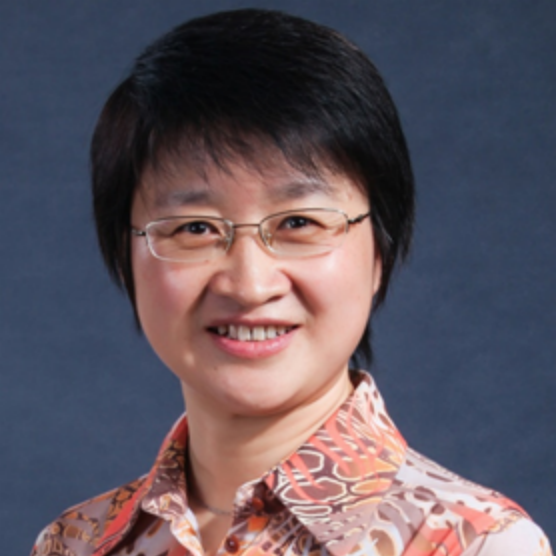
王晓军
中国人民大学吴玉章讲席教授,统计学院教授。国家统计专家咨询委员会委员,兼任中国统计教育学会副会长、国务院学位委员会统计学学科评议组召集人、全国应用统计专业学位研究生教育指导委员会秘书长、国家统计局-中国人民大学数据开发中心执行主任。主要从事人口统计、人寿保险、养老金、社会保障以及与健康相关的风险量化模型与应用研究。
2
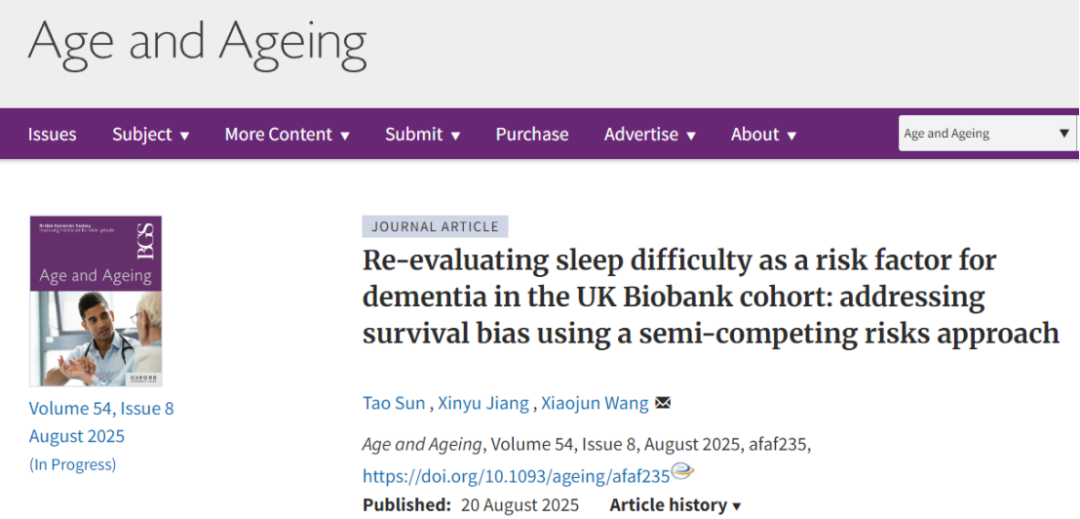
论文发表截图
3
论文题目
Re-evaluating sleep difficulty as a risk factor for dementia in the UK Biobank cohort: addressing survival bias using a semi-competing risks approach
4
报告摘要
Sleep difficulty, a prevalent sleep disturbance in ageing populations, has shown paradoxical associations with dementia risk in prior epidemiological studies. Emerging evidence suggests that survival bias—where premature mortality in individuals with sleep difficulty obscures dementia risk—may explain these inconsistencies. We analysed data from 457,367 UK Biobank participants aged 40–69 years who were enrolled at baseline between 2006 and 2010 and followed until 2022. Sleep difficulty was assessed via self-reported questionnaires, and dementia was obtained from electronic health records. To address survival bias, we employed a semi-competing risks framework that jointly models dementia incidence and mortality, contrasting results with conventional Cox proportional hazard models. Semi-competing risk analyses suggested that usual sleep difficulty modestly increased risks of vascular dementia (fully adjusted HR 1.14, 95% CI 1.02–1.28) and slightly increased all-cause dementia (HR 1.03, 95% CI 0.98–1.08) in the total sample. The association is particularly strong in younger adults (below 55 years old) and low APOE risk (APOE ε4 non-carriers) when adjusted for age, sex and education. Conversely, Cox models suggested a protective association between usual sleep difficulty and all-cause dementia in the total sample, aligning with prior UK Biobank studies. This discrepancy highlights how survival bias distorts risk estimates. Our findings resolve conflicting evidence by demonstrating sleep difficulty’s direct dementia risk when accounting for competing mortality. The semi-competing risks approach provides a robust framework for ageing research, when survival bias is present. Clinically, these results underscore sleep difficulty management as a modifiable dementia prevention target in mid-to-late life.
中国人民大学健康大数据研究院于2023年5月获批成立,为学校首批建设的16个创新高地之一。研究院聚焦国民健康中的数据科学挑战,面向国民健康测度、评估、管理等社会重大现实问题开展基础研究与应用研究,致力于服务“健康中国”国家战略重大需求、构建健康大数据领域国内领先、国际一流的创新型研究高地。
Copyright ©2016 中国人民大学科学技术发展部 版权所有
地址:北京市海淀区中关村大街59号中国人民大学明德主楼1121B 邮编:100872
电话:010-62513381 传真:010-62514955 电子邮箱: ligongchu@ruc.edu.cn
京公网安备110402430004号